Packing lunch seems simple. Until you look at the pile of plastic that comes with it. Cling film. Foil. Disposable cutlery. Tiny packets. Juice boxes. Snack wrappers. It all adds up.
The good news? A zero-waste lunch is not only possible, it’s surprisingly easy when you swap single-use plastics for long-lasting, well-designed containers like Tupperware. With a few smart choices, you can turn every lunch break into a small win for the planet.
In this guide, you’ll see how Tupperware helps replace disposable plastics at school, in the office, and on the go—without sacrificing convenience, freshness, or style.
What is a zero-waste lunch?
A zero-waste lunch aims to create as little rubbish as possible. That means:
-
No cling film or foil.
-
No disposable plastic bags or cutlery.
-
Minimal to no packaging.
-
Reusable containers, bottles, and wraps.
-
Compostable food scraps where possible.
It’s not about being perfect. It’s about making better choices most of the time. A sturdy lunch box and a few versatile containers do most of the heavy lifting.
The hidden cost of single-use plastics
Single-use plastics feel convenient in the moment. But each piece sticks around for decades.
-
Many lunch plastics aren’t recyclable because they’re too small, too thin, or food-soiled.
-
Lightweight plastics blow out of bins and end up in rivers and oceans.
-
Microplastics now appear in soil, water, and even our food chain.
Now imagine this: one child using a plastic-wrapped sandwich, a snack packet, and a juice box each school day. Multiply that by a year. Then by every child in a school. The numbers climb fast.
Switching to reusable containers cuts that waste dramatically. And you only have to make the switch once.
Why Tupperware works so well for zero-waste lunches
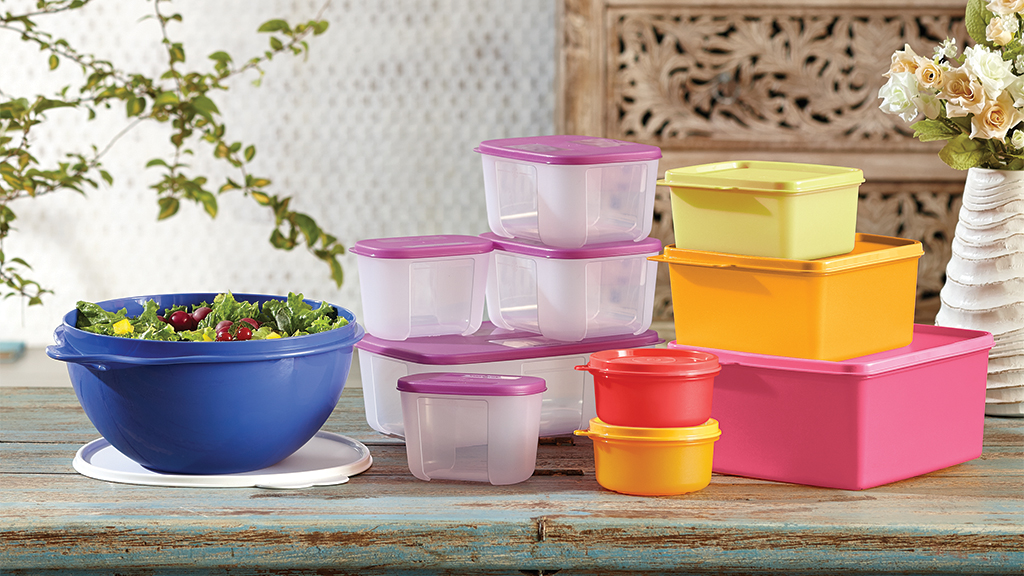
Not all containers are created equal. Zero-waste habits stick when your gear is reliable, easy to use, and nice to look at. That’s where Tupperware shines.
-
Built to last. High-quality materials reduce the need to replace cracked or warped containers every few months.
-
Leak-resistant designs. Proper seals mean no soggy bags or leaked curries on laptops.
-
Portion-friendly sizes. From tiny snack cups to full meal boxes, it’s easy to portion food and avoid waste.
-
Organised and stackable. Neat stacks in your fridge or pantry encourage meal prep and reduce forgotten leftovers.
-
Safe materials. Designed for food contact and repeated use, when used as instructed.
Reusable containers only work if people actually want to use them. Tupperware’s colours, shapes, and modular designs make that more likely.
For school: turning kids into zero-waste heroes
School lunches can easily become a mountain of single-use plastic. But they’re also the easiest place to start changing habits.
Smart swaps for common school plastics
-
Cling-wrapped sandwiches → Sandwich keeper or flat lunch box.
No more crushed sandwiches, and no film to throw away. -
Single-serve snack packets → Small snack containers.
Buy larger packs or bulk snacks and portion them into little tubs. -
Juice boxes and packets → Reusable bottle or sipper.
Fill with water or homemade drinks and skip the straw and foil. -
Disposable cutlery → Reusable fork and spoon set.
Pack in a slim container so it stays clean after washing.
Make it fun so kids stick to it
Children are more likely to bring back containers—and eat their food—if lunch feels exciting.
-
Create “mini tasting platters” with a divided lunch box: fruits, crackers, cheese cubes, veggie sticks, hummus.
-
Use bright-coloured Tupperware to help kids quickly recognise their own lunch.
-
Add a little “treat compartment” so they feel like they’re not missing out on packaged snacks.
-
Involve them in packing lunch. Let them choose which container to use and what goes inside.
With a simple Tupperware lunch kit—one main box, a snack container, and a bottle—you can remove almost all single-use plastic from a school lunch.
For the office: zero-waste that actually fits your workday
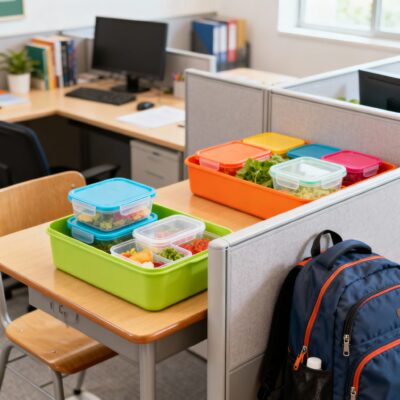
Office lunches often mean takeaway boxes, plastic cutlery, and flimsy containers that leak. A small Tupperware setup can change that, while saving money.
Build a weekly meal-prep system
Use a few matching containers to create a simple structure for your workweek:
-
Main meal containers. For rice bowls, pastas, curries, grain salads, or leftovers.
-
Side/salad boxes. Keep salad leaves separate from dressings to avoid sogginess.
-
Snack cups. For nuts, fruits, dips, yoghurt, or energy bites.
Cook once or twice a week, portion into your Tupperware, and stack in the fridge. In the morning, grab a set and go. No last-minute apps, no plastic-laden deliveries.
Ditch the plastic at work
Tupperware also helps you avoid “emergency plastics” at the office:
-
Bring a compact container and cutlery set to say no to disposable plates and forks at meetings.
-
Keep a tumbler or mug at your desk for coffee instead of plastic-lined cups.
-
Use a small container to store tea bags, sugar, or snacks so you don’t buy single-use sachets.
You’ll cut packaging waste and usually eat better food, too.
For travel: zero-waste lunches on the go
Travel is where plastic sneaks in fastest—airports, train stations, petrol stops, tourist spots. Everything comes in a wrapper.
A small Tupperware travel kit helps you keep control.
Road trips and day outings
Pack reusable containers before you leave:
-
A main container for sandwiches, wraps, or parathas.
-
One or two snack boxes for fruits, trail mix, nuts, biscuits, or cut veggies.
-
A leak-resistant container for gravies, dips, or yoghurt.
-
A sturdy water bottle you can refill along the way.
Instead of buying packaged snacks every time someone feels hungry, you open your box. Less waste, less money, less sugar.
Trains, flights, and commuting
-
Pre-pack meals to avoid overpriced, over-packaged food.
-
Use flat, stackable Tupperware that fits easily into backpacks or laptop bags.
-
Pack an empty container when returning, so you still avoid disposables if you buy something on the way back.
Reusable containers also protect delicate foods. No more smashed bananas or leaking yoghurt cups all over your luggage.
How to assemble a simple zero-waste lunch kit
You don’t need a drawer full of containers. A small, intentional set is enough.
Aim for:
-
1–2 main meal containers. For full lunches or hearty salads.
-
2–4 small snack containers. For nuts, fruits, dips, chutneys, or desserts.
-
1 divided or “bento-style” box. Great for kids or grazers who like variety.
-
1 reusable bottle or tumbler. To replace juice boxes and plastic bottles.
-
1 compact cutlery set. Fork, spoon, and maybe chopsticks in a slim case.
-
1 reusable cloth napkin. Replaces tissue packs and wipes.
Choose pieces that nest or stack to save storage space at home and in your bag.
Keeping Tupperware fresh, clean, and long-lasting
The easier containers are to care for, the more you’ll actually use them.
-
Rinse soon after use, especially if you’ve packed oily, tomato-based, or spicy foods.
-
For stains or odours, soak in warm water with a bit of baking soda and a drop of dish soap.
-
Air dry thoroughly before storing to avoid musty smells.
-
Store with lids off or slightly open so air can circulate.
-
Reserve a few “strong food” containers for curry, chilli, or sauces to keep others clear.
Good care keeps your Tupperware looking fresh and extends its life, which is the whole point of zero waste.
Making the mindset shift: from disposable to dependable
Zero-waste lunches aren’t about perfection. They’re about choosing reusables over disposables most of the time. The more you prepare, the easier it becomes.
Tupperware makes that shift feel natural:
-
Food stays fresh and protected.
-
Lunches look more appealing.
-
Your bag stays clean.
-
And you stop throwing away plastic every single day.
Start small. Replace cling film with one container. Swap one snack packet for a snack box. Add a water bottle. Those tiny, repeated choices reshape your daily footprint—and show the kids around you what responsible habits look like.
Your lunch break can stay just as satisfying. The pile of rubbish at the end of it doesn’t have to.