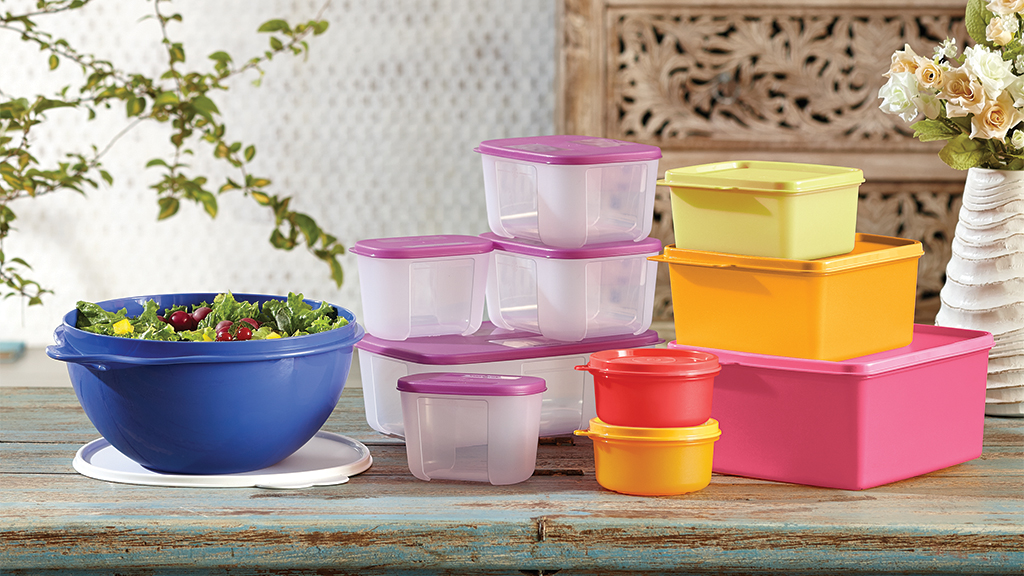
We all have that one cabinet. You know the one. You open it, and an avalanche of plastic lids and mismatched bottoms comes tumbling out.
Tupperware (and food storage containers in general) is the unsung hero of the kitchen. It saves our leftovers. It keeps our pantry organized. It holds our lunches.
But good quality containers are an investment. And if you treat them poorly, they get gross fast. They stain. They warp. They start to smell like last month’s curry.
If you want to stop buying new sets every six months, you need to change how you treat your plastic. Here is how to keep your containers looking brand new for years.
The Dishwasher Debate
First, let’s talk about washing. Can you put them in the dishwasher? Usually, yes. But there are rules.
Always use the top rack.
The heating element in most dishwashers is at the bottom. If you place plastic containers on the bottom rack, they get too close to that intense heat. That is how lids warp. That is how bowls lose their shape. Once a lid warps, the seal is gone, and the container is useless.
If you have a “sanitize” cycle, skip it for plastics. The extra-high heat is overkill and ages the material faster.
Detergents and Scrubbers
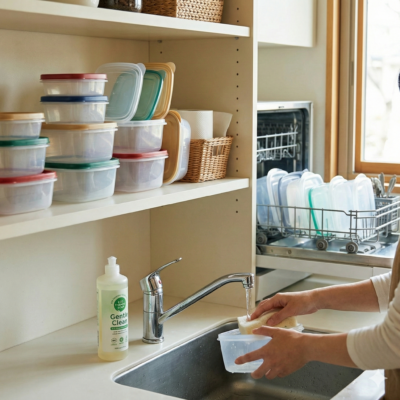
When hand washing, you need to be gentle.
It is tempting to grab the steel wool or a stiff green scouring pad to scrub off dried lasagna. Don’t do it.
Abrasive scrubbers create micro-scratches on the surface of the plastic. You might not see them at first. But over time, these scratches act like a magnet for stains and bacteria.
Once a container is scratched up, it becomes impossible to clean perfectly. It will hold onto grease and smells forever.
Stick to a soft sponge or a microfiber cloth. For detergent, standard dish soap is fine. If you have a stubborn grease layer, don’t scrub harder. Soak it in hot, soapy water for 20 minutes. Let the soap do the work.
The “Spaghetti Sauce” Problem
We have all been there. You store leftover spaghetti Bolognese in a pristine clear container. You microwave it the next day. Now your container is permanently orange.
The culprit is usually the combination of tomato acidity and fat heating up.
Here is the secret to avoiding stains: Spray the inside of the container with non-stick cooking spray before you put the food in. It creates a barrier between the sauce and the plastic.
If the damage is already done, try the sunlight trick. Wash the container, then set it outside in direct sunlight for a day. The UV rays are surprisingly good at bleaching out tomato stains.
Handling the Heat
Microwaving is the fastest way to ruin Tupperware.
Even if a container says “microwave safe,” that doesn’t mean it’s invincible. Fats and sugars get incredibly hot—much hotter than the boiling point of water.
If you microwave a sugary sauce or a fatty meat, the food can get hot enough to actually melt a layer of the plastic. This causes that rough, white “pitting” you see on the bottom of old containers.
The best solution? Transfer the food to a ceramic bowl or plate before nuking it. It takes ten extra seconds, but it saves your storage ware.
Smart Storage
Finally, how you store them matters.
Never store your containers with the lids sealed tight. If there is even a tiny drop of moisture left inside, a sealed lid creates a breeding ground for mildew and stale “plastic” smells.
Store them with the lids off to let them breathe.
If you are short on space and need to stack them, put a paper towel or a coffee filter between the bowls. This prevents them from getting stuck together (vacuum sealed) and helps absorb any lingering moisture.
The Bottom Line
A little care goes a long way. Treat your plastic containers like you treat your pots and pans, not like disposable trash. They will stay clear, odor-free, and seal tightly for years to come.