Everyone has bought fresh greens or berries that looked perfect one day and sad the next.
The difference between “gone in two days” and “still crisp next week” often comes down to how well you control air, moisture and gas inside your containers.
What actually makes produce spoil?
Fruits and vegetables are still alive after harvest, so they keep “breathing” in a process called respiration that slowly breaks down their own sugars and shortens shelf life.
High respiration speeds up wilting, softening and loss of flavor, especially when temperature, humidity and gases like oxygen and carbon dioxide are not well controlled.
Most fresh produce is also vulnerable to microbes such as bacteria and fungi, which thrive when there is excess moisture and air movement.
Add natural ripening gas like ethylene on top of that, and sensitive items can turn from firm to overripe very quickly if the atmosphere around them is not managed.
How airtight seals slow down damage
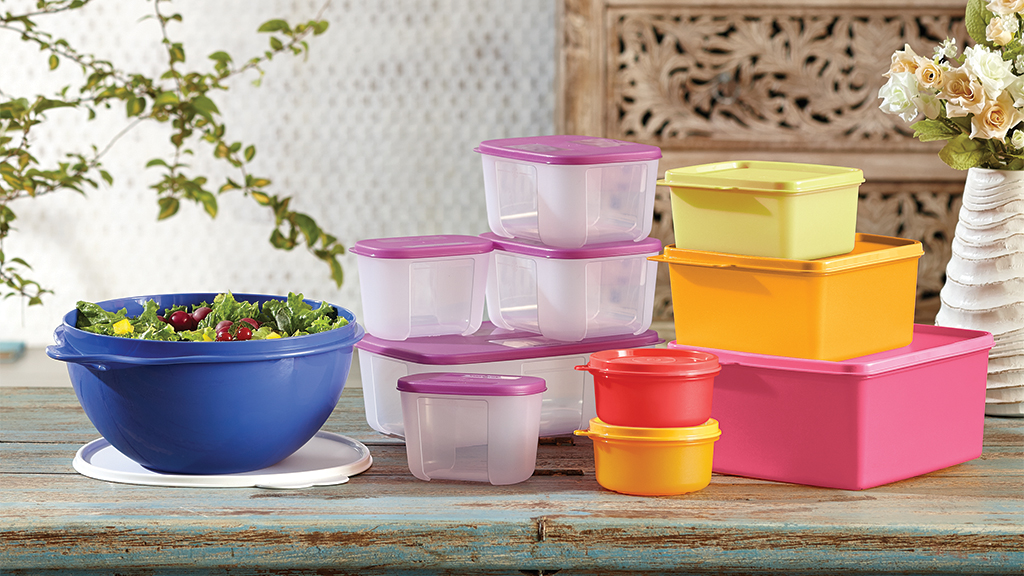
Airtight lids dramatically cut down how much fresh air, including oxygen, can move in and out of a container.
Lower oxygen around produce slows respiration, which in turn slows softening, yellowing and nutrient loss.
By sealing in moisture, airtight containers also reduce water loss from vegetables, so leaves and herbs stay crisp instead of limp.
At the same time, a tight seal forms a barrier against outside microbes and odors, which helps delay mold growth and keeps flavors cleaner for longer.
Why vents and humidity control matter
The catch is that not every fruit or vegetable wants the exact same environment.
Some spoil faster if humidity is too high and condensation forms, while others wilt when the air is too dry.
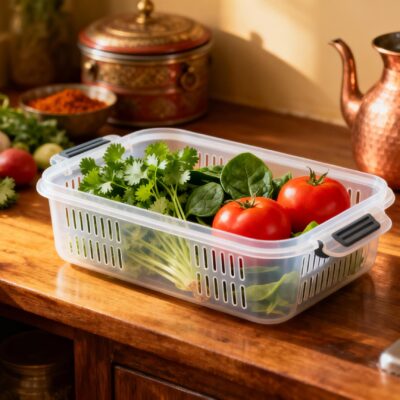
Smart Venting solves this by adding small, adjustable openings that let you tune airflow and humidity inside the container, similar to a refrigerator crisper drawer.
Closing vents traps more moisture and creates a high‑humidity zone for leafy greens and thin‑skinned vegetables; opening them lets excess moisture and ethylene escape for items that rot or bruise easily.
Matching produce to the right setting
High‑humidity, mostly closed vents work best for produce that wilts, like lettuce, coriander, spinach, cucumbers and broccoli, because they need a moist environment to avoid drying out.
These items benefit from an airtight or nearly airtight seal with just enough Smart Venting to prevent wet spots and slimy leaves.
Low‑humidity, more open vents suit ethylene‑producing fruits such as apples, pears and melons, which stay firmer when extra gas and moisture can escape.
Keeping these in vented containers—and away from sensitive vegetables—helps slow overripening and reduces waste in your crisper.
Simple habits that boost shelf life
Do a quick sort before storing: keep damaged or heavily bruised pieces out of airtight containers because they encourage faster microbial growth.
Avoid overpacking boxes so air can circulate evenly and the vents can actually do their job.
Use colder zones of your fridge for high‑respiration produce, because lower temperatures and the right container atmosphere together slow both respiration and microbial activity.
When you pair airtight seals with Smart Venting and thoughtful placement in the fridge, you are essentially running a mini controlled‑atmosphere system at home—and that is why your herbs, salads and fruits suddenly start lasting days, not hours.